
Airbnb in Paris in 2026: the new rules that change the game for owners
3 minutes
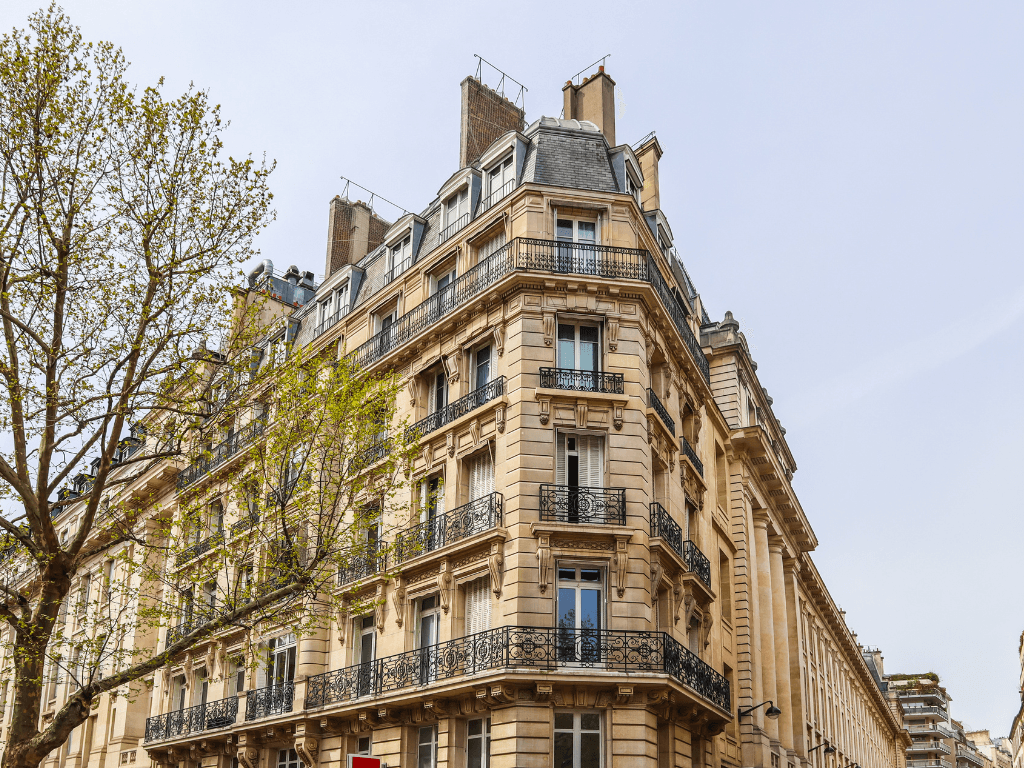
Paris has never been an easy city for undeclared tourist rentals. But since the election of Emmanuel Grégoire as mayor, a threshold has been crossed: the City is moving from regulation to actual enforcement. Increased controls, systematic fines, expanded restrictions on second homes — the Airbnb model as it existed just two years ago is no longer viable for a large portion of Parisian owners.
This guide looks at what is concretely changing in 2026, what remains possible, and, above all, how to intelligently reposition your property if you are affected.
What regulation still permits: occasional rental of your primary residence
Let’s be clear from the outset: Airbnb is not banned in Paris. Short-term rentals remain legal — under specific conditions that many owners still do not know well or only partially apply.
To rent out your primary residence on a platform like Airbnb, three requirements apply without exception:
First, prior declaration to the town hall. Any property offered for tourist rental must be declared to the City of Paris services, which will issue a registration number that must be displayed on your listing.
Second, compliance with the limit of 90 nights per calendar year. This is the legal limit for a primary residence. Beyond that, you cross into illegal territory — regardless of the platform and regardless of the tenant's profile.
Finally, the personal use of the accommodation must remain real and documentable. A property rented out on a short-term basis for almost the entire year can no longer claim primary residence status under tax and administrative regulations.
Within this legal framework, occasional rental remains a relevant option for the owner-occupier who wishes to monetize their apartment during their absences. This is its natural use — and this is precisely what the regulations seek to preserve.
What is now blocked: secondary residences as tourist rentals
This is where the changes are most significant and have the greatest impact on investors who had structured their strategy around short-term rentals.
Offering a secondary residence — meaning a property that you do not occupy as your main residence — as a tourist rental in Paris requires a change of use authorization. This administrative procedure legally converts the residential property into commercial premises, which allows for permanent tourist exploitation.
The problem: this authorization is extremely difficult to obtain in Paris, and its cost is prohibitive. The compensation imposed by the City — which consists of converting an equivalent commercial surface area into residential housing in the same arrondissement — represents in practice between €1,000 and €3,000 per square meter, sometimes more in central areas. For a 40 m² apartment, the bill can exceed €100,000, with no guarantee of obtaining the authorization.
As a result: any new rental investment project focused on Airbnb for a Parisian secondary residence is today economically unviable. And properties already operating without authorization are exposing themselves to sanctions that are no longer symbolic.
Controls moving from theory to practice
Parisian regulations on tourist rentals existed before 2026. What changes with the new administration is the will — and the resources — to actually enforce them.
The City now has data-sharing agreements with the main booking platforms. Airbnb, Booking, and their competitors transmit information on active listings, rental durations, and generated income. Enforcement services can thus automatically identify properties that exceed legal limits or operate without a registration number.
The fines in the event of an infraction can reach €50,000 per property. This is no longer a theoretical risk that owners could rationalize as acceptable: it is a real financial exposure, making the infraction structurally unprofitable.
For multi-property owners and managers operating several properties as intensive tourist rentals, regulatory pressure is reaching a critical threshold. Several of them have already begun shifting to other rental models — a trend that will accelerate in 2026.
What concrete alternatives are there for affected owners?
If your property no longer fits within the legal framework of short-term rentals, or if you simply want to secure your situation, several alternatives are available to you — some more profitable than you might think.
Medium-term furnished rentals under a Civil Code lease
This is the solution that best matches the demand spilling over from short-term rentals: corporate mobility professionals, expatriates, diplomats, and researchers on assignment. These tenants need a furnished apartment for a duration of a few months to one or two years. They are looking precisely for what the Airbnb market can no longer reliably offer them.
The Civil Code lease is the appropriate framework for this type of rental. It is subject neither to rent control nor to the constraints of the 1989 law. The owner freely sets the rent amount, lease duration, and contractual terms. Termination is possible with three months' notice before the end of the term, without having to justify a reason.
For a well-located and properly furnished Parisian apartment, this type of rental often achieves rent levels comparable to short-term rentals — with infinitely fewer operational constraints, turnover, and regulatory risks.
Long-term furnished rentals under the 1989 law
For owners who prefer stability over flexibility, furnished rentals under the regime of the July 6, 1989 law remain a solid option. The lease is for one renewable year (nine months for a student). Rent control applies, but reference rents in Paris remain high for well-presented, quality properties.
Combined with the actual tax regime (régime réel) and accounting depreciation, long-term furnished rentals can offer a highly competitive net yield — often underestimated by owners who only calculate using gross figures.
Three questions that owners are currently asking us
My property is a secondary residence, and I have been operating it as a short-term rental for several years. What do I actually risk?
Without a change of use authorization, you are in violation. The City now has the technical tools to identify your listing and quantify your activity. The maximum fine is €50,000 per property. The recommendation is clear: anticipate conversion rather than waiting for an inspection.
I rent my primary residence for 80 nights a year. Do I need to do anything?
If your property is declared at the town hall and your listing displays your registration number, you are in compliance. Just ensure you remain under the 90-night threshold and that your tracking is accurate — platforms can provide detailed statements in the event of an audit.
Is the Civil Code lease really exempt from rent control?
Yes, unambiguously. Parisian rent control applies to leases governed by the 1989 law, which means primary residence rentals. The Civil Code lease, used for secondary residences or rentals to corporate entities, falls under a free contractual framework. The City of Paris has no jurisdiction to regulate it.
Are you an owner in Paris looking to reposition your property?
BAUVAUT supports Parisian landlords in all situations: converting a short-term property to medium or long-term furnished rentals, letting under a Civil Code lease for a corporate or international clientele, and full rental management. Contact us for an initial discussion and a free valuation of your property.