
Top 7 tax traps of furnished rentals
7 minutes
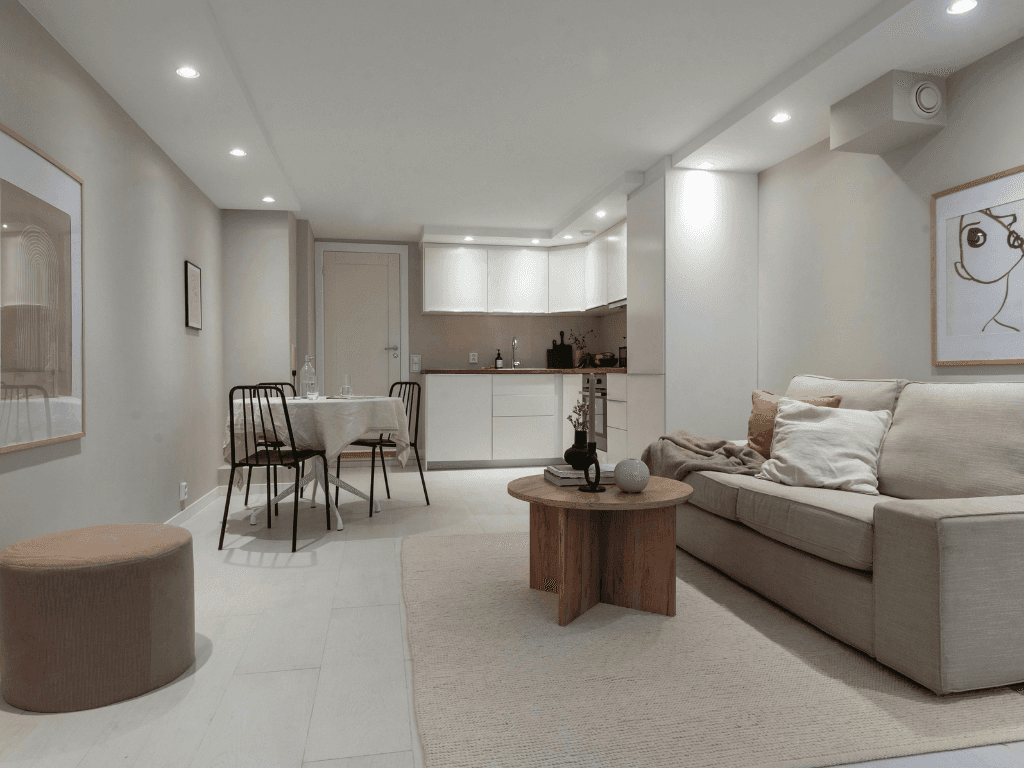
Furnished rental is an extraordinarily efficient tax scheme — when you master the rules. The problem: these rules are numerous, shifting, and full of pitfalls that you usually only discover when they produce their effects. Once the trap is sprung, the room for maneuver is narrow.
In Paris, where rents and market values are high, every tax mistake costs thousands of euros. Here are the seven most common pitfalls — those we regularly correct for our new property owner clients, and that you absolutely must know if you rent or plan to rent furnished property.
1. Remaining in the micro-BIC for convenience, without having calculated the trade-off
This is the most common mistake. The micro-BIC is appealing because of its simplicity: one box to fill in, a flat-rate deduction of 50%, no bookkeeping to maintain. Many owners stay in it by default, without ever checking if the real tax regime (régime réel) would be more advantageous.
Yet the calculation takes just three lines: if your real expenses + depreciation exceed 50% of your income, the real regime is more efficient. In Paris, as soon as you have an ongoing mortgage, rising property tax, co-ownership charges, and a property with significant depreciable value, the threshold is crossed mechanically.
The cost of the trap: between €2,000 and €8,000 in excess taxes per year and per property, based on the cases we have audited.
2. Ignoring the THRS during vacant periods
This is the most underestimated operational pitfall. The residence tax on secondary residences (THRS) applies to any furnished accommodation not occupied as a primary residence as of January 1st. In Paris, the municipal surcharge brings the overall rate to particularly high levels — for a typical 50 m² apartment in a central district, the bill can exceed €2,000.
The mechanism of the trap is purely calendar-based: a lease ending on December 31st, or a tenancy starting on January 5th, is enough to shift the property's taxation into the secondary residence regime for the entire year.
Situation as of January 1st | THRS due? |
|---|---|
Tenant in place (primary lease) | No |
Tenant in place (furnished Civil Code lease) | No (if tenant's primary residence) |
Vacant property between two rentals | Yes |
Short-term tenant left the day before | Yes |
The defense is operational, not tax-related: structuring lease end dates to avoid vacancy on January 1st. This is precisely what attentive rental management must anticipate.
3. Shifting into LMP status without realizing it
The LMNP (non-professional) status shifts to LMP (professional) as soon as two cumulative conditions are met: furnished rental income exceeds €23,000/year AND exceeds the other active income of the tax household.
In Paris, the first threshold is reached with two properties rented furnished at €1,000/month. The second depends on your situation: a retired owner, a stay-at-home parent, or a business owner paid in dividends can shift to LMP with just one property.
The tax consequences of the shift are major:
URSSAF affiliation with contributions between 35% and 40% of the profit (flat-rate minimum of around €1,250/year even in the absence of profit)
Capital gains on resale subject to the professional regime — loss of deductions for holding period
Reintegration of depreciation into the taxable base upon exit
Many owners discover their shift during an URSSAF audit, sometimes years after the fact. The reassessment, with penalties and late interest, can then reach six-figure amounts.
4. Underestimating the exit taxation
The great strength of LMNP under the real regime — depreciation — is also its main deferred effect. Since the 2025 finance law, depreciation claimed is reintegrated into the calculation of capital gains upon the resale of the property.
Concretely, if you have depreciated €150,000 on a property purchased for €500,000, your tax acquisition price is reduced to €350,000 at the time of resale. The taxable capital gain is thus mechanically increased — and with it, the tax due.
This change, which came into force on January 1st, 2025, does not call into question the benefit of LMNP under the real regime — the accumulated advantage during the holding period remains highly positive — but it changes the exit strategy. A resale after 22 years of ownership (exemption from capital gains tax) or 30 years (exemption from social security contributions) becomes highly relevant again.
5. Confusing property income (revenus fonciers) and BIC
Classic case: an owner rents their property unfurnished for several years, then decides to furnish it to switch to LMNP. The property deficit accumulated during unfurnished rental cannot be carried forward to the BIC income of the furnished rental. Conversely, a BIC deficit is never offset against global income, unlike a property deficit.
The trap comes from perception: one thinks "it's still rental income". Tax-wise, they are two different categories, two different mechanics, two different strategies. The transition from unfurnished to furnished must be planned in advance to avoid losing the benefit of past deficits.
6. Neglecting the CFE and accounting obligations
Under the real regime, you are subject to the Corporate Property Contribution (CFE) starting from the second year of activity — the first year being exempt. The amount varies by municipality, but in Paris it generally ranges between €200 and €1,500 per year.
Beyond the CFE, the real regime requires full accrual accounting: balance sheet, income statement, 2031 tax return, 2033 schedules. An owner who chooses the real regime without accounting assistance exposes themselves to reporting errors that can cancel out the benefits of the regime — or even trigger a tax audit.
The annual cost of a specialized LMNP chartered accountant (€500 to €1,500 depending on the number of properties) is, in almost all cases, largely offset by the optimization they generate. It is one of the only expense items in furnished rental that systematically produces a positive ROI.
7. Misunderstanding the impact of the three hotel-like services
This is the most subtle trap — and the one that specifically lies in wait for owners of short-term rentals like Airbnb. If you provide at least three of the following four services:
Personalized guest reception
Provision of household linen
Regular cleaning during the stay
Breakfast
… your activity shifts tax-wise to hotel-like services (para-hôtellerie). Consequences:
You become subject to VAT (with possible recovery on works and acquisition, but mandatory monthly or quarterly returns)
Your income falls under the professional BIC category, with URSSAF affiliation
The LMNP regime no longer applies
Many Airbnb hosts in Paris provide these services without measuring their tax implications. Recharacterization, in the event of an audit, is retroactive and heavy.
Anticipating traps is already winning
The taxation of furnished rental is not dangerous in itself — it is dangerous when you just endure it. Each of these seven traps can be defused provided it is identified in time, ideally before the first rental, or at the latest before the first tax return.
This is precisely the role of specialized support: combining optimization levers and traps to avoid to build a tax strategy that holds up over time — not a rushed declaration made every spring.
Any doubts about your tax regime, your LMNP/LMP status, or the structuring of your furnished rental? BAUVAUT offers you a complete tax audit of your situation, in connection with a specialized LMNP partner chartered accountant. Request your free audit — with no obligation.